
https://www.lawyersgunsmoneyblog.com/2025/06/this-day-in-labor-history-june-16-1958
about:blank

Home / General / This Day in Labor History: June 16, 1958
This Day in Labor History: June 16, 1958

By Erik Loomis
/
On June 16, 2025
/
At 7:00 am
/
In General
262 Views
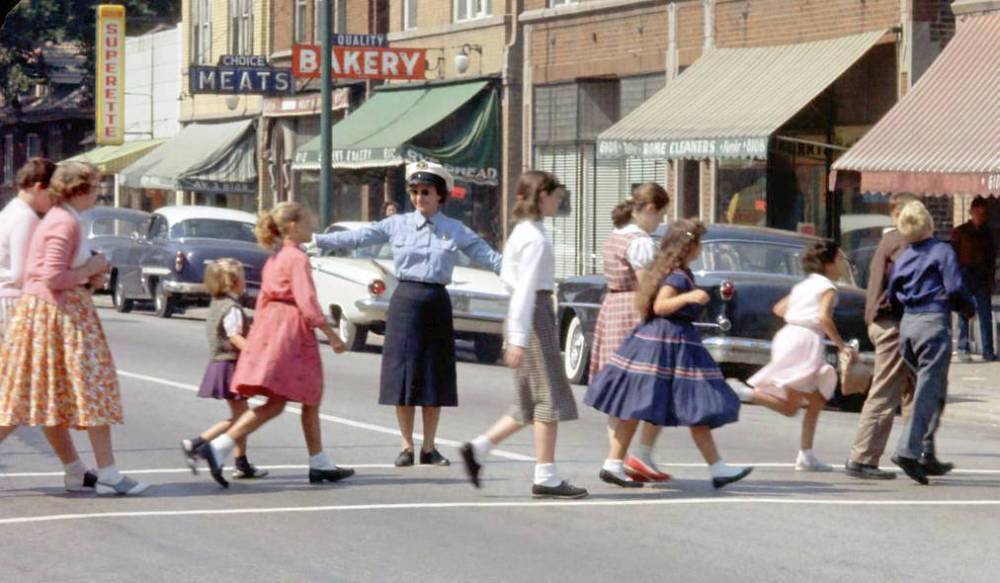
On June 16, 1958, the Chicago Crossing Guards Association rejected an offer from AFSCME to join the union because these women did not believe the union would fight effectively for them. This is a date that allows us to explore the fascinating history of crossing guards in postwar America and their labor militancy that did eventually lead to widespread unionization.
After World War II, with the rise of the Baby Boom, school districts began taking the issue of children crossing streets near schools seriously. So they hired people to be crossing guards. This practice started in Cleveland in 1925, but was rare elsewhere until the late 40s. Initially, these were usually men, often retired from other jobs. But this turned to women primarily, often against the will of the police, who felt that all patrolling was a male job. But ideas of women as mothers getting their kids to school safely won out. Gender roles always play a role in work cultures and almost certainly will forever. Often these were married women whose own children were among those attending the school where she worked.
Women at various schools started meeting because the police were involved in training these women (again, often against their desires) and so they would meet at these training exercises. In many cities, the police technically were the employers, though police unions were strictly gender segregated and these were civilian employees of the police departments. Naturally, these women would start talking about their working conditions, issues with catcalling male drivers (the media often sexualized these women when covering them, which did not help), issues with the cops, etc. And since these crossing guards mostly existed in northern cities and northern cities were segregated by neighborhood, women from different races patrolling their own schools would also meet at these larger training sessions and compare notes. So in cities across the country, women formed crossing guard associations that became sort of proto-unions.
The women had complaints. They had to work without proper equipment in all weather. They didn’t receive enough money or medical insurance. They had to buy their own uniforms. By 1954, crossing guards in Philadelphia, under what they called the Philadelphia Crossing Guards Association, organized enough to have a coordinated letter writing campaign to the mayor about their issues. But the city didn’t care and didn’t even respond. This just organized the women more and by the end of 1955, the police commissioner announced medical treatment for women injured on duty that was the same as actual police received. There was a slight pay increase too. Similar organizing took place in Chicago, with similar slow responses from the Richard Daley administration, but also eventual gains. And let’s be clear, this could be a dangerous job. In New York, a crossing guard was run down and killed by a car in 1957 as she saved a child’s life, which led that city to expand medical compensation to the guards.
Not surprisingly, unions began to show interest. In 1958 in Chicago, the American Federation of State, County and Municipal Employees (AFSCME) tried to organize the crossing guards in that city. The crossing guards association rejected it outright and in remarkable language. Said Chicago Crossing Guards Association vice president Kathryn Lisle:
“1) Our association leaders have a more natural aptitude for verbal combat 2) We have more endurance and determination than male negotiators 3) Women are much more practical than men at the bargaining table and 4) It is much harder to fool a woman.”
On the verbal combat, there’s no question. Shortly before this, a Chicago alderman named Paddy Bauler said against the women, “All you crossing guards do is stand on corners and do nothing. Or you hide in doorways and smoke cigarettes. I’m against women who smoke cigarettes.” This led CCGA president Dorothy King to shoot back, ” “Your English is poor. Your manners are repulsive. And your clothes are sloppy.” Lisle herself chipped in, telling Bauler, “Alderman, if you come near my corner, I’ll push you under a truck.” Now that’s standing up for yourself! Basically, the women did not trust AFSCME to be useful to them and that’s probably a fair point. Since public sector unions did not have collective bargaining rights yet, the CCGA felt that working with the Daley administration made more sense to them. It also did not want men leading it at all and there’s no way AFSCME was going to let women run the show.
The 1960s saw a rise in public sector unionism throughout the North, with the expansion of collective bargaining rights. For several years still, crossing guard associations rejected union advancement, but as unions grew more powerful, some joined. In 1967, the Philadelphia association merged with AFSCME Council 33, which was at the time a pretty militant union that had seen democratic upheaval based around civil rights and sanitation work, appealing to the crossing guards in way the old guard had not. AFSCME soon won the guards a big pay raise, vacation pay, paid holidays, and more benefits. That led to more crossing guard actions across the country, including a one day strike in Hartford in 1969 and the rapid unionization of the crossing guards throughout Connecticut later that year.
As a general rule though, the crossing guards avoided direct labor action and preferred to use maternalist language to work with the cities as their strategy to fight for better wages and working conditions. By the 70s and 80s though, unions such as Service Employees International Union, Laborers International Union of America, and Communication Workers of America started representing crossing guards. They became a part of the union map during the period of growing labor power in the cities.
More broadly. we can and should look at these crossing guards as an important moment in the rise of labor feminism, with women taking on new forms of work and making it their own, making their own demands on the cities and using their own strategies to achieve their aims. This could change unions as well–AFSCME generally became much better about pay equity issues once it had crossing guards. A few of the guards in Philadelphia also rose to positions of real power and authority within AFSCME as well. By the 70s and 80s, AFSCME became a serious ally of labor feminism more broadly due to all of this, often working with women’s organizations on the state and federal law for legislation to promote women at work. Crossing guard associations also still exist today and sometimes still have a good bit of labor militancy in them, including public protests for a living wage in New York in 2015.
I borrowed from Francis Ryan, “You’ll Never Walk Alone: School Crossing Guard Associations and Labor Feminism in the Postwar United States” published in the February 2023 issue of Labor to write this post.
This is the 569th post in this series. Previous posts are archived here.
afscme, chicago, labor, This Day in Labor History, women and work
Prev PostJosh Hawley: the massive Medcaid cuts I support don’t count as Medicaid cuts
Next PostWhat Will Happen after the 2030 Census?
Archives
Select Month June 2025 May 2025 April 2025 March 2025 February 2025 January 2025 December 2024 November 2024 October 2024 September 2024 August 2024 July 2024 June 2024 May 2024 April 2024 March 2024 February 2024 January 2024 December 2023 November 2023 October 2023 September 2023 August 2023 July 2023 June 2023 May 2023 April 2023 March 2023 February 2023 January 2023 December 2022 November 2022 October 2022 September 2022 August 2022 July 2022 June 2022 May 2022 April 2022 March 2022 February 2022 January 2022 December 2021 November 2021 October 2021 September 2021 August 2021 July 2021 June 2021 May 2021 April 2021 March 2021 February 2021 January 2021 December 2020 November 2020 October 2020 September 2020 August 2020 July 2020 June 2020 May 2020 April 2020 March 2020 February 2020 January 2020 December 2019 November 2019 October 2019 September 2019 August 2019 July 2019 June 2019 May 2019 April 2019 March 2019 February 2019 January 2019 December 2018 November 2018 October 2018 September 2018 August 2018 July 2018 June 2018 May 2018 April 2018 March 2018 February 2018 January 2018 December 2017 November 2017 October 2017 September 2017 August 2017 July 2017 June 2017 May 2017 April 2017 March 2017 February 2017 January 2017 December 2016 November 2016 October 2016 September 2016 August 2016 July 2016 June 2016 May 2016 April 2016 March 2016 February 2016 January 2016 December 2015 November 2015 October 2015 September 2015 August 2015 July 2015 June 2015 May 2015 April 2015 March 2015 February 2015 January 2015 December 2014 November 2014 October 2014 September 2014 August 2014 July 2014 June 2014 May 2014 April 2014 March 2014 February 2014 January 2014 December 2013 November 2013 October 2013 September 2013 August 2013 July 2013 June 2013 May 2013 April 2013 March 2013 February 2013 January 2013 December 2012 November 2012 October 2012 September 2012 August 2012 July 2012 June 2012 May 2012 April 2012 March 2012 February 2012 January 2012 December 2011 November 2011 October 2011 September 2011 August 2011 July 2011 June 2011 May 2011 April 2011 March 2011 February 2011 January 2011 December 2010 November 2010 October 2010 September 2010 August 2010 July 2010 June 2010 May 2010 April 2010 March 2010 February 2010 January 2010 December 2009 November 2009 October 2009 September 2009 August 2009 July 2009 June 2009 May 2009 April 2009 March 2009 February 2009 January 2009 December 2008 November 2008 October 2008 September 2008 August 2008 July 2008 June 2008 May 2008 April 2008 March 2008 February 2008 January 2008 December 2007 November 2007 October 2007 September 2007 August 2007 July 2007 June 2007 May 2007 April 2007 March 2007 February 2007 January 2007 December 2006 November 2006 October 2006 September 2006 August 2006 July 2006 June 2006 May 2006 April 2006 March 2006 February 2006 January 2006 December 2005 November 2005 October 2005 September 2005 August 2005 July 2005 June 2005 May 2005 April 2005 March 2005 February 2005 January 2005 December 2004 November 2004 October 2004 September 2004 August 2004 July 2004 June 2004 May 2004
Recent Posts
- Everything Everywhere at Once Update
- It’s a sin to let a sucker keep his money
- “The mother no longer has any interests”: the ballad of the American anti-abortion movement
- Is it undemocratic for the candidate with the most support from the majority of voters to win?
- Donald Trump as one weird trick for national salvation
- The Starmer Problem for Democrats
- Ten years gone
- What Will Happen after the 2030 Census?
- This Day in Labor History: June 16, 1958
- Josh Hawley: the massive Medcaid cuts I support don’t count as Medicaid cuts
Tags
2008 democratic primary agriculture baseball books California china civil liberties Civil War climate change COVID-19 deaths education energy environment film food foreign policy gay and lesbian rights Gilded Age graves hacktacular health care higher education immigration i see dead people labor LGM film club music music notes Native Americans new gilded age nfl podcast race racism reproductive freedom russia Sarah Palin slavery Supreme Court television texas This Day in Labor History trump wingnuttery
Meta
Copyright at 2025. Lawyers, Guns & Money All Rights Reserved
about:blank
 R.M.P Marotta Long Island
Leave a comment