

https://de18c0aa64fef0252a8e8703879a1426.safeframe.googlesyndication.com/safeframe/1-0-45/html/container.htmlEnvironmentJun 17, 2025
Alaska Just Had Its First-Ever Heat Advisory
The climate milestone has central Alaska forecasted to “feel like 110” in a state where the sun can shine all day.Forecasted temperatures for June 16 in Alaska. NOAA

Lois Parshley / Grist
This story was originally published by Grist. Sign up for Grist’s weekly newsletter here.In the high glare of a summer evening in Fairbanks, Alaska, Ciara Santiago watched the mercury climb. A meteorologist at the National Weather Service office, she had the dubious honor of issuing the state’s first ever official heat advisory as temperatures were expected to hit the mid-80s.It’s the kind of bureaucratic alert that rarely makes national headlines. But in a city where permafrost thaw buckles roads, homes lack air conditioning, and the high at this time of year is generally in the low 70s, the warning comes as a sign of rapidly shifting climate. Alaska is warming more than twice as fast as the global average. In Alaska, where hazardous cold is historically more of a concern, weather offices in Fairbanks — just 120 miles south of the Arctic circle as the raven flies — didn’t have the option of issuing heat advisories until the beginning of this month, when it was added to a list of possible public alerts. “It gives us a more direct way of communicating these kinds of hazards when they occur,” Santiago said.Alaska is warming more than twice as fast as the global average.The heat bearing down on Alaska isn’t entirely unprecedented, at least in meteorological terms. On the heels of a cold spring, a dome of high pressure, known as an upper-level ridge, has settled over the Interior, a fairly common pattern that traps warm air. In the state’s central valleys, that can spell high temperatures and dry conditions. Temperatures on Friday reached a high of 82 degrees Fahrenheit. An updated advisory on Sunday warned the hot conditions would last until Tuesday, with “temperatures up to 87F to 89F… Isolated areas up to 90F are possible, especially in the Yukon Flats.”“People in [the] Lower 48 might think that’s nothing, but here those temps could feel like 110,” Santiago said.With nearly 22 hours of sunlight approaching the solstice, daytime heat accumulates and lingers — not just outside, but indoors. Unlike the Lower 48, most homes in Alaska weren’t built to keep heat out, but to keep it in during months of subzero cold. The thick insulation this requires turns houses into ovens during extended periods of hot temperatures. In Europe, where infrastructure is similarly designed for cold climates, a brutal 2003 heat wave exposed the potential risks: It killed 35,000 people.That’s part of why the state’s new heat advisory matters. It’s not just a weather bulletin. It’s a warning for a state where most people don’t have the coping mechanisms taken for granted elsewhere — shaded porches, central air, even knowing the signs of heatstroke.The city of Fairbanks, seen here in a file photo, sits 120 miles south of the Arctic Circle and saw temperatures in the mid-80s. Jacob Boomsma / Getty Imageshttps://de18c0aa64fef0252a8e8703879a1426.safeframe.googlesyndication.com/safeframe/1-0-45/html/container.htmlThe sudden temperature jump also poses its own challenges. “I’m originally from Texas,” Santiago said. “I’m so used to hot summers that in the 50s, I start putting on a jacket. Now living in Alaska, I’m wearing dresses at that temperature.” But it’s not just a matter of clothing: When your body adapts to higher temperatures, the volume of blood expands, allowing your heart to pump more efficiently and reducing heat stress. You begin sweating earlier, and produce more sweat per gland. But it generally takes one to two weeks of exposure to adapt, making sudden swings in temperature riskier. The office Santiago works for, like many National Weather Service offices, have recently lost staff under Trump administration cuts. More than 560 members were laid off across the country, reducing its capacity by about a third, and leaving many stations critically understaffed. As a result, the Fairbanks office that made the state’s first heat warning must now suspend operations overnight. “We’re working to the best of our ability with what we have,” Santiago said. The early start to summer heat comes after a winter with low snow levels and early melt, raising concerns about fire season. Layoffs have also affected firefighting staff, where both technical expertise and basic manpower are in question. Concerned about federal capacity, California Gov. Newsom launched a firefighter recruitment effort this week, but in Alaska, much of the wildland firefighting force is federal, raising the question of whether those like Santiago who must prepare for threats ahead will have the resources they need.WAIT BEFORE YOU GO…This year, the ground feels uncertain — facts are buried and those in power are working to keep them hidden. Now more than ever, independent journalism must go beneath the surface.At Truthdig, we don’t just report what’s happening — we investigate how and why. We follow the threads others leave behind and uncover the forces shaping our future.Your tax-deductible donation fuels journalism that asks harder questions and digs where others won’t.Don’t settle for surface-level coverage.Unearth what matters. Help dig deeper.Donate now.SUPPORT TRUTHDIGIn this Article:#alaska#climate change#fairbanks#global warming#heat advisory
Related Stories
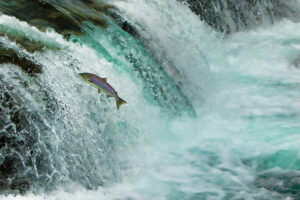



Salmon Are Vanishing — And So Is a Way of Life
Max Graham / GristAs waters warm, Alaska Native families confront a world without the fish that fed them for generations.Environment
We Must Protect America’s ‘Last Climate Sanctuary’
Reynard Loki / IMIThe Tongass National Forest in Alaska is the largest national forest in the United States. We must preserve it.Environment
Alaska Salmon Face a Tide of New Mines
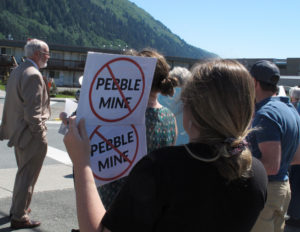
Becki Robins / UndarkActive and proposed mines threaten key salmon watersheds in Alaska and British Columbia.
Earth Had its Hottest Decade on Record in 2010s
SETH BORENSTEIN / The Associated PressScientists say they see no end to the way human-caused climate change is adversely affecting the planet.
Americans Can’t Decolonize Their Holidays Soon Enough
Amy Goodman and Denis MoynihanColumbus Day is increasingly being replaced by a celebration of indigenous peoples and their central role in our history and in our future.
Reaganism Must Be Defeated Once and for All
Thom Hartmann / Independent Media InstituteAs long as the U.S. and other nations cling to neoliberal economics, their citizens will continue to drift toward far-right authoritarians.
Conversations (0)
You need to be a supporter to comment.
There are currently no responses to this article.
Be the first to respond.
All content © 2025 Truthdig, LLC. All rights reserved.
Become a memberJoin our NewsletterFollow UsSign in

https://de18c0aa64fef0252a8e8703879a1426.safeframe.googlesyndication.com/safeframe/1-0-45/html/container.htmlEnvironmentJun 17, 2025
Alaska Just Had Its First-Ever Heat Advisory
The climate milestone has central Alaska forecasted to “feel like 110” in a state where the sun can shine all day.Forecasted temperatures for June 16 in Alaska. NOAA
Lois Parshley / Grist
This story was originally published by Grist. Sign up for Grist’s weekly newsletter here.In the high glare of a summer evening in Fairbanks, Alaska, Ciara Santiago watched the mercury climb. A meteorologist at the National Weather Service office, she had the dubious honor of issuing the state’s first ever official heat advisory as temperatures were expected to hit the mid-80s.It’s the kind of bureaucratic alert that rarely makes national headlines. But in a city where permafrost thaw buckles roads, homes lack air conditioning, and the high at this time of year is generally in the low 70s, the warning comes as a sign of rapidly shifting climate. Alaska is warming more than twice as fast as the global average. In Alaska, where hazardous cold is historically more of a concern, weather offices in Fairbanks — just 120 miles south of the Arctic circle as the raven flies — didn’t have the option of issuing heat advisories until the beginning of this month, when it was added to a list of possible public alerts. “It gives us a more direct way of communicating these kinds of hazards when they occur,” Santiago said.Alaska is warming more than twice as fast as the global average.The heat bearing down on Alaska isn’t entirely unprecedented, at least in meteorological terms. On the heels of a cold spring, a dome of high pressure, known as an upper-level ridge, has settled over the Interior, a fairly common pattern that traps warm air. In the state’s central valleys, that can spell high temperatures and dry conditions. Temperatures on Friday reached a high of 82 degrees Fahrenheit. An updated advisory on Sunday warned the hot conditions would last until Tuesday, with “temperatures up to 87F to 89F… Isolated areas up to 90F are possible, especially in the Yukon Flats.”“People in [the] Lower 48 might think that’s nothing, but here those temps could feel like 110,” Santiago said.With nearly 22 hours of sunlight approaching the solstice, daytime heat accumulates and lingers — not just outside, but indoors. Unlike the Lower 48, most homes in Alaska weren’t built to keep heat out, but to keep it in during months of subzero cold. The thick insulation this requires turns houses into ovens during extended periods of hot temperatures. In Europe, where infrastructure is similarly designed for cold climates, a brutal 2003 heat wave exposed the potential risks: It killed 35,000 people.That’s part of why the state’s new heat advisory matters. It’s not just a weather bulletin. It’s a warning for a state where most people don’t have the coping mechanisms taken for granted elsewhere — shaded porches, central air, even knowing the signs of heatstroke.The city of Fairbanks, seen here in a file photo, sits 120 miles south of the Arctic Circle and saw temperatures in the mid-80s. Jacob Boomsma / Getty Imageshttps://de18c0aa64fef0252a8e8703879a1426.safeframe.googlesyndication.com/safeframe/1-0-45/html/container.htmlThe sudden temperature jump also poses its own challenges. “I’m originally from Texas,” Santiago said. “I’m so used to hot summers that in the 50s, I start putting on a jacket. Now living in Alaska, I’m wearing dresses at that temperature.” But it’s not just a matter of clothing: When your body adapts to higher temperatures, the volume of blood expands, allowing your heart to pump more efficiently and reducing heat stress. You begin sweating earlier, and produce more sweat per gland. But it generally takes one to two weeks of exposure to adapt, making sudden swings in temperature riskier. The office Santiago works for, like many National Weather Service offices, have recently lost staff under Trump administration cuts. More than 560 members were laid off across the country, reducing its capacity by about a third, and leaving many stations critically understaffed. As a result, the Fairbanks office that made the state’s first heat warning must now suspend operations overnight. “We’re working to the best of our ability with what we have,” Santiago said. The early start to summer heat comes after a winter with low snow levels and early melt, raising concerns about fire season. Layoffs have also affected firefighting staff, where both technical expertise and basic manpower are in question. Concerned about federal capacity, California Gov. Newsom launched a firefighter recruitment effort this week, but in Alaska, much of the wildland firefighting force is federal, raising the question of whether those like Santiago who must prepare for threats ahead will have the resources they need.WAIT BEFORE YOU GO…This year, the ground feels uncertain — facts are buried and those in power are working to keep them hidden. Now more than ever, independent journalism must go beneath the surface.At Truthdig, we don’t just report what’s happening — we investigate how and why. We follow the threads others leave behind and uncover the forces shaping our future.Your tax-deductible donation fuels journalism that asks harder questions and digs where others won’t.Don’t settle for surface-level coverage.Unearth what matters. Help dig deeper.Donate now.SUPPORT TRUTHDIGIn this Article:#alaska#climate change#fairbanks#global warming#heat advisory
Related Stories
Salmon Are Vanishing — And So Is a Way of Life
Max Graham / GristAs waters warm, Alaska Native families confront a world without the fish that fed them for generations.Environment
We Must Protect America’s ‘Last Climate Sanctuary’
Reynard Loki / IMIThe Tongass National Forest in Alaska is the largest national forest in the United States. We must preserve it.Environment
Alaska Salmon Face a Tide of New Mines
Becki Robins / UndarkActive and proposed mines threaten key salmon watersheds in Alaska and British Columbia.
Earth Had its Hottest Decade on Record in 2010s
SETH BORENSTEIN / The Associated PressScientists say they see no end to the way human-caused climate change is adversely affecting the planet.
Americans Can’t Decolonize Their Holidays Soon Enough
Amy Goodman and Denis MoynihanColumbus Day is increasingly being replaced by a celebration of indigenous peoples and their central role in our history and in our future.
Reaganism Must Be Defeated Once and for All
Thom Hartmann / Independent Media InstituteAs long as the U.S. and other nations cling to neoliberal economics, their citizens will continue to drift toward far-right authoritarians.
Conversations (0)
You need to be a supporter to comment.
There are currently no responses to this article.
Be the first to respond.
All content © 2025 Truthdig, LLC. All rights reserved.
Search by topic, author or tag
https://de18c0aa64fef0252a8e8703879a1426.safeframe.googlesyndication.com/safeframe/1-0-45/html/container.htmlEnvironmentJun 17, 2025
Alaska Just Had Its First-Ever Heat Advisory
The climate milestone has central Alaska forecasted to “feel like 110” in a state where the sun can shine all day.Forecasted temperatures for June 16 in Alaska. NOAA
Lois Parshley / Grist
This story was originally published by Grist. Sign up for Grist’s weekly newsletter here.In the high glare of a summer evening in Fairbanks, Alaska, Ciara Santiago watched the mercury climb. A meteorologist at the National Weather Service office, she had the dubious honor of issuing the state’s first ever official heat advisory as temperatures were expected to hit the mid-80s.It’s the kind of bureaucratic alert that rarely makes national headlines. But in a city where permafrost thaw buckles roads, homes lack air conditioning, and the high at this time of year is generally in the low 70s, the warning comes as a sign of rapidly shifting climate. Alaska is warming more than twice as fast as the global average. In Alaska, where hazardous cold is historically more of a concern, weather offices in Fairbanks — just 120 miles south of the Arctic circle as the raven flies — didn’t have the option of issuing heat advisories until the beginning of this month, when it was added to a list of possible public alerts. “It gives us a more direct way of communicating these kinds of hazards when they occur,” Santiago said.Alaska is warming more than twice as fast as the global average.The heat bearing down on Alaska isn’t entirely unprecedented, at least in meteorological terms. On the heels of a cold spring, a dome of high pressure, known as an upper-level ridge, has settled over the Interior, a fairly common pattern that traps warm air. In the state’s central valleys, that can spell high temperatures and dry conditions. Temperatures on Friday reached a high of 82 degrees Fahrenheit. An updated advisory on Sunday warned the hot conditions would last until Tuesday, with “temperatures up to 87F to 89F… Isolated areas up to 90F are possible, especially in the Yukon Flats.”“People in [the] Lower 48 might think that’s nothing, but here those temps could feel like 110,” Santiago said.With nearly 22 hours of sunlight approaching the solstice, daytime heat accumulates and lingers — not just outside, but indoors. Unlike the Lower 48, most homes in Alaska weren’t built to keep heat out, but to keep it in during months of subzero cold. The thick insulation this requires turns houses into ovens during extended periods of hot temperatures. In Europe, where infrastructure is similarly designed for cold climates, a brutal 2003 heat wave exposed the potential risks: It killed 35,000 people.That’s part of why the state’s new heat advisory matters. It’s not just a weather bulletin. It’s a warning for a state where most people don’t have the coping mechanisms taken for granted elsewhere — shaded porches, central air, even knowing the signs of heatstroke.The city of Fairbanks, seen here in a file photo, sits 120 miles south of the Arctic Circle and saw temperatures in the mid-80s. Jacob Boomsma / Getty Imageshttps://de18c0aa64fef0252a8e8703879a1426.safeframe.googlesyndication.com/safeframe/1-0-45/html/container.htmlThe sudden temperature jump also poses its own challenges. “I’m originally from Texas,” Santiago said. “I’m so used to hot summers that in the 50s, I start putting on a jacket. Now living in Alaska, I’m wearing dresses at that temperature.” But it’s not just a matter of clothing: When your body adapts to higher temperatures, the volume of blood expands, allowing your heart to pump more efficiently and reducing heat stress. You begin sweating earlier, and produce more sweat per gland. But it generally takes one to two weeks of exposure to adapt, making sudden swings in temperature riskier. The office Santiago works for, like many National Weather Service offices, have recently lost staff under Trump administration cuts. More than 560 members were laid off across the country, reducing its capacity by about a third, and leaving many stations critically understaffed. As a result, the Fairbanks office that made the state’s first heat warning must now suspend operations overnight. “We’re working to the best of our ability with what we have,” Santiago said. The early start to summer heat comes after a winter with low snow levels and early melt, raising concerns about fire season. Layoffs have also affected firefighting staff, where both technical expertise and basic manpower are in question. Concerned about federal capacity, California Gov. Newsom launched a firefighter recruitment effort this week, but in Alaska, much of the wildland firefighting force is federal, raising the question of whether those like Santiago who must prepare for threats ahead will have the resources they need.WAIT BEFORE YOU GO…This year, the ground feels uncertain — facts are buried and those in power are working to keep them hidden. Now more than ever, independent journalism must go beneath the surface.At Truthdig, we don’t just report what’s happening — we investigate how and why. We follow the threads others leave behind and uncover the forces shaping our future.Your tax-deductible donation fuels journalism that asks harder questions and digs where others won’t.Don’t settle for surface-level coverage.Unearth what matters. Help dig deeper.Donate now.SUPPORT TRUTHDIGIn this Article:#alaska#climate change#fairbanks#global warming#heat advisory
Related Stories
Salmon Are Vanishing — And So Is a Way of Life
Max Graham / GristAs waters warm, Alaska Native families confront a world without the fish that fed them for generations.Environment
We Must Protect America’s ‘Last Climate Sanctuary’
Reynard Loki / IMIThe Tongass National Forest in Alaska is the largest national forest in the United States. We must preserve it.Environment
Alaska Salmon Face a Tide of New Mines
Becki Robins / UndarkActive and proposed mines threaten key salmon watersheds in Alaska and British Columbia.
Earth Had its Hottest Decade on Record in 2010s
SETH BORENSTEIN / The Associated PressScientists say they see no end to the way human-caused climate change is adversely affecting the planet.
Americans Can’t Decolonize Their Holidays Soon Enough
Amy Goodman and Denis MoynihanColumbus Day is increasingly being replaced by a celebration of indigenous peoples and their central role in our history and in our future.
Reaganism Must Be Defeated Once and for All
Thom Hartmann / Independent Media InstituteAs long as the U.S. and other nations cling to neoliberal economics, their citizens will continue to drift toward far-right authoritarians.
Conversations (0)
You need to be a supporter to comment.
There are currently no responses to this article.
Be the first to respond.
All content © 2025 Truthdig, LLC. All rights reserved.
 R.M.P Marotta Long Island
Leave a comment